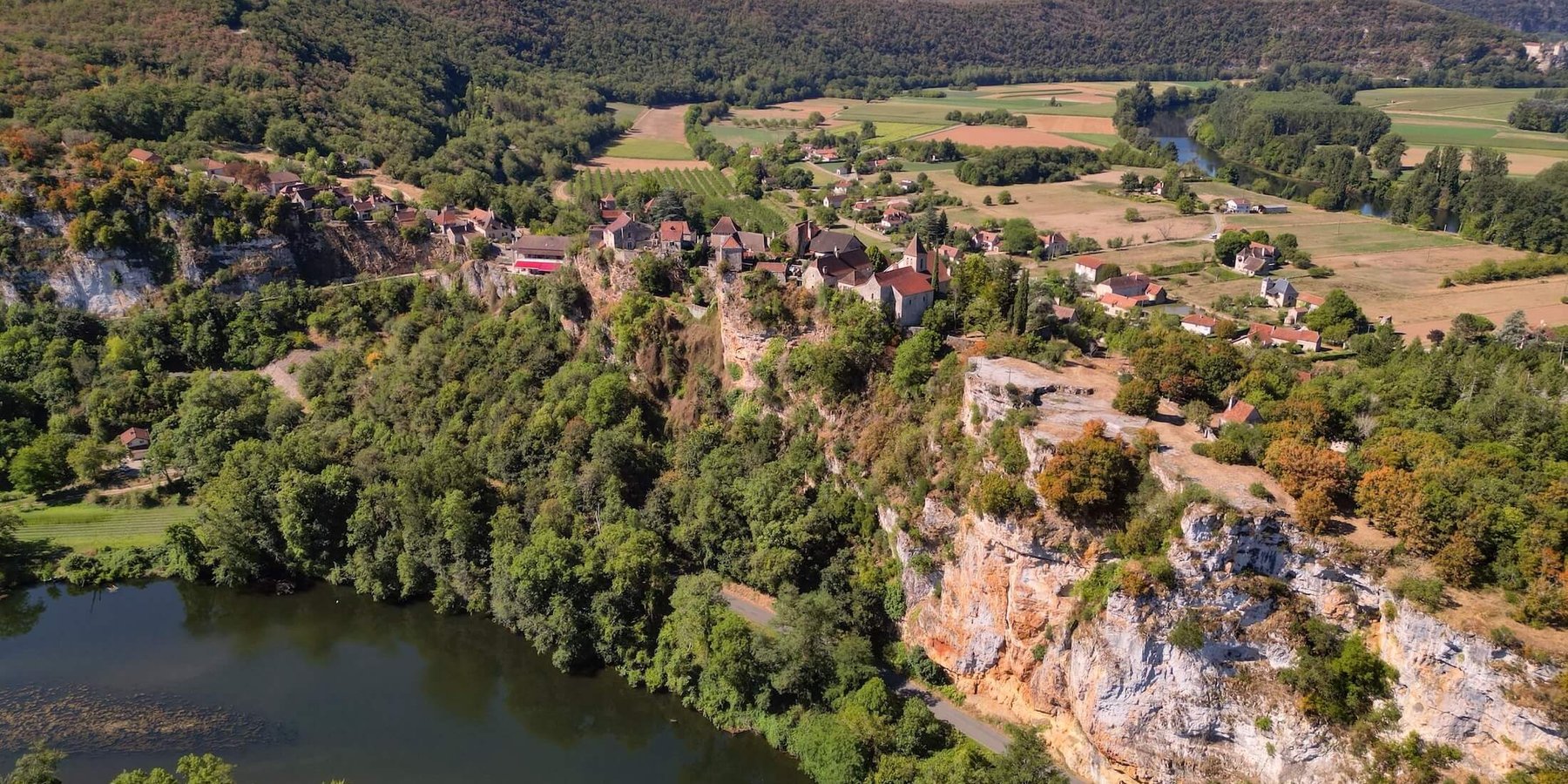
A six-night journey through Quercy, one of France's most picturesque and historic rural landscapes. Discover medieval villages, rocky limestone landscapes and glorious local cuisine while staying in some of the region's most superbly converted chateaux, manors and guest houses.
- Duration
- 6 nights
- How We Travel
- Electric mountain biking and walking
-
Activity Level
Graded between 1 (easiest) and 5 (most challenging). Click for more details
- Bike Type
- Front suspension hybrid electric bikes
- Price
- £3,895 per person
- Group Size
- Maximum 12 guests
Journey Highlights
- Cycle through the rolling limestone plateaux and valleys of Quercy.
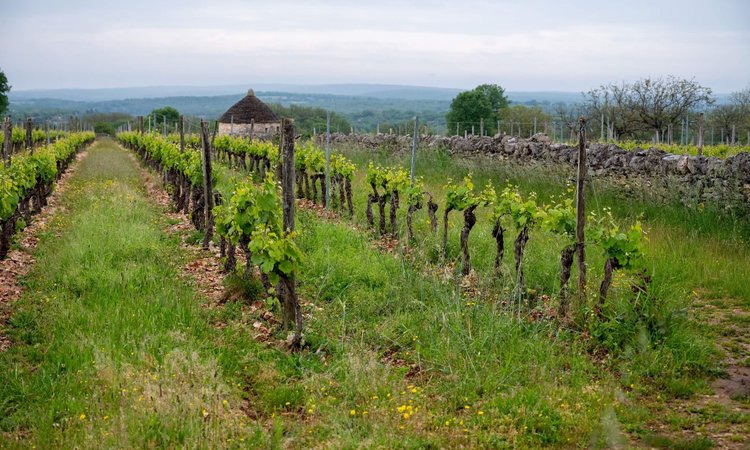
- Meet local winemakers in the Cahors vineyards, where you'll discover long family traditions and sample fine Malbecs.
- Visit the vibrant market in Cahors and taste local delicacies such as confit de canard, Rocamadour, foie gras, goat cheese and black truffles.
- Swim in the Lot and Célé rivers that meander through deep limestone valleys, or cool off in peaceful pools at the chateaux.
- Stay in some of the most delightful accommodation we've experienced in France including a manor house, hunting lodge and chateau.
- Walk through walnut groves and colourful wildflower meadows.
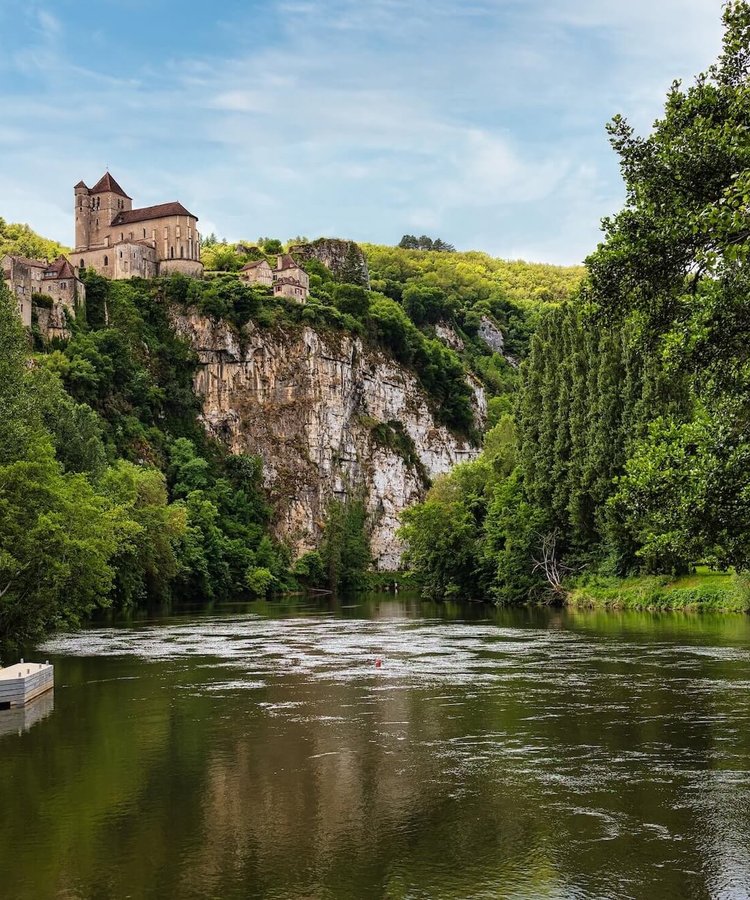
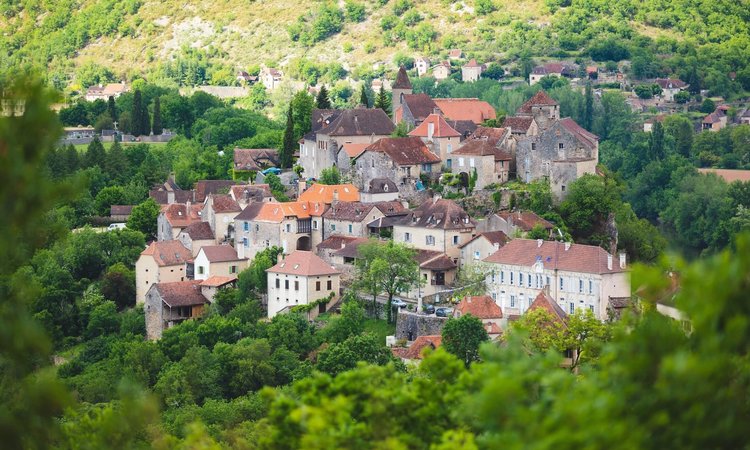
- Discover medieval villages perched on hillsides.
- End your days with sunset aperitifs at charming local guest houses overlooking the river valley.
Good to Know
- The nearest airport is in Toulouse, also a magical city to explore for a few days before or after your Slow Cyclist journey.
- For an environmentally friendly travel option, it's possible to travel from London to Toulouse on high speed trains within a day.
- There are plenty of opportunities to swim on this journey, but the rivers can be very cold in spring.
- For larger groups requiring more than five rooms, we may split the group between Mas de Garrigue and another nearby guest house.
Welcome to The Slow Cyclist
I have visited the Quercy Blanc around Cahors every year for over a decade. The landscape, named for its bright, white limestone bedrock, is a stunning patchwork of sun-drenched vineyards, golden sunflower fields and charming hilltop villages with endless market days. I've found its quiet country lanes and ancient pilgrimage routes have provided me with some of my most enjoyable rides over the years. And of course, there is always exceptional food at the end. I hope you enjoy your time exploring this peaceful corner of France as much as I have.
 Oli Broom
Founder, The Slow Cyclist
The Journey
We begin near Cahors, a medieval town perched on the edge of the Lot River which we follow upstream, cycling its meandering route through vineyards and valleys. Gradually climbing onto the limestone Causses (plateaux gouged with deep valleys), we reach some of France's most beautiful villages. From there, we cycle and walk through river valleys and wooded hillsides, stopping to enjoy hidden chapels, panoramic viewpoints and table picnics of delicious local cuisine. Our journey ends in Figeac, a medieval village perched on a hilltop. Each day is varied, offering a true immersion into this magical region.
Is It For Me?
Our journeys are built around friendship, exceptional hospitality and the great outdoors. Slow Cyclists are curious travellers with a bit of juice in their legs, approaching our time on a bike - or on foot - as an opportunity to explore rather than test our fitness. That’s not to say we don’t pedal hard sometimes, just that we are often distracted by the food, history and people that make a place special. When we see something interesting, we tend to stop and take it in rather than race by. If this sounds like you, we're pretty sure you'll love your time exploring southwest France with us.
When to Go?
We host guests in Quercy in May, June, September, and October. Spring brings wildflowers and lush green fields while autumn offers golden vineyards, mild temperatures, and an abundant harvest. Summer days can be hot but the rivers and shaded lanes offer plenty of opportunities to cool off. Expect daytime highs of 20–28°C, cooler in the evenings.
The Walking & Cycling
This journey is taken mostly by electric bike with some walking. For cycling we use front suspension hybrid electric bikes. Cycles are 30 – 55 kms, mostly on smooth, quiet tarmac roads. We are cycling through hilly valleys so there are a few steep hills, both up and down. Some tracks have sections that require good balance due to loose gravel. A moderate level of cycling fitness and an ability to cycle up and downhill is required, but this journey is suitable for almost all levels of cyclist. On foot, the walks take up to two hours, on occasionally uneven terrain with hilly sections. The journey has the potential for flexibility. There are different route options each day and the precise split between road and off-road depends on the ability and confidence of the group.
Find out more about our activity levels here.
Swimming
All of our guest houses have pools so you can cool off after a day on the bikes, enjoying a moment of tranquility in their beautiful surrounds. There will be opportunities to swim in the Lot or Célé rivers along our journey, conditions permitting. We'll find peaceful, secluded spots surrounded by forests and cliffs, with nobody else around. The rivers can be chilly during spring, but very pleasant in the summer.
Food & Drink
Quercy’s cuisine is hearty and generous. You'll have the opportunity to sample duck in all its forms (confit, magret, cassoulet), rich truffle omelettes, fresh river fish, Rocamadour goat’s cheese and walnut tarts. Of course there will be plenty of chances to sample Cahors wine. We’ll picnic on baguettes, cheeses and seasonal fruit from the markets, as well as dining in village bistros and enjoying home-cooked meals at our charming guest houses.
Itinerary
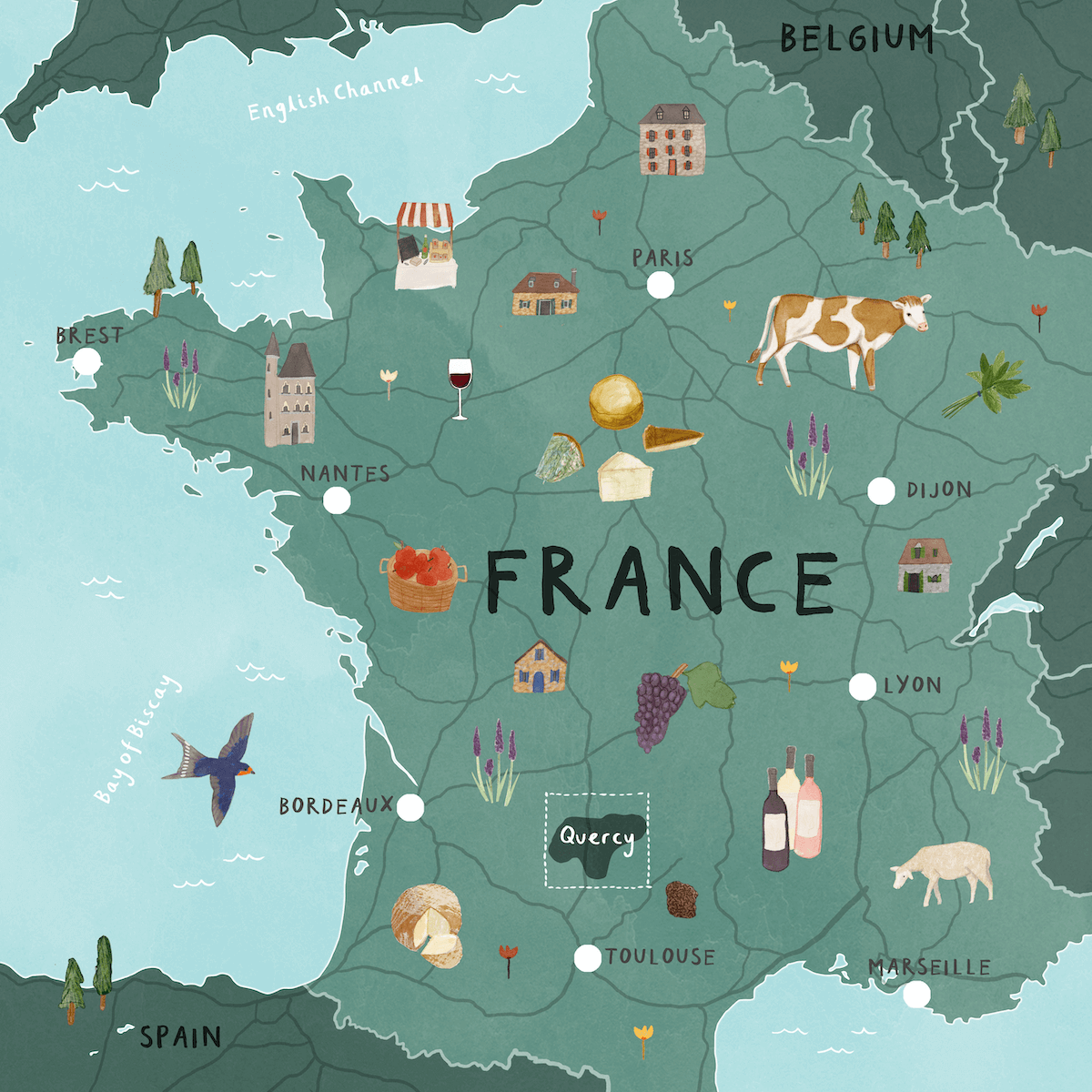
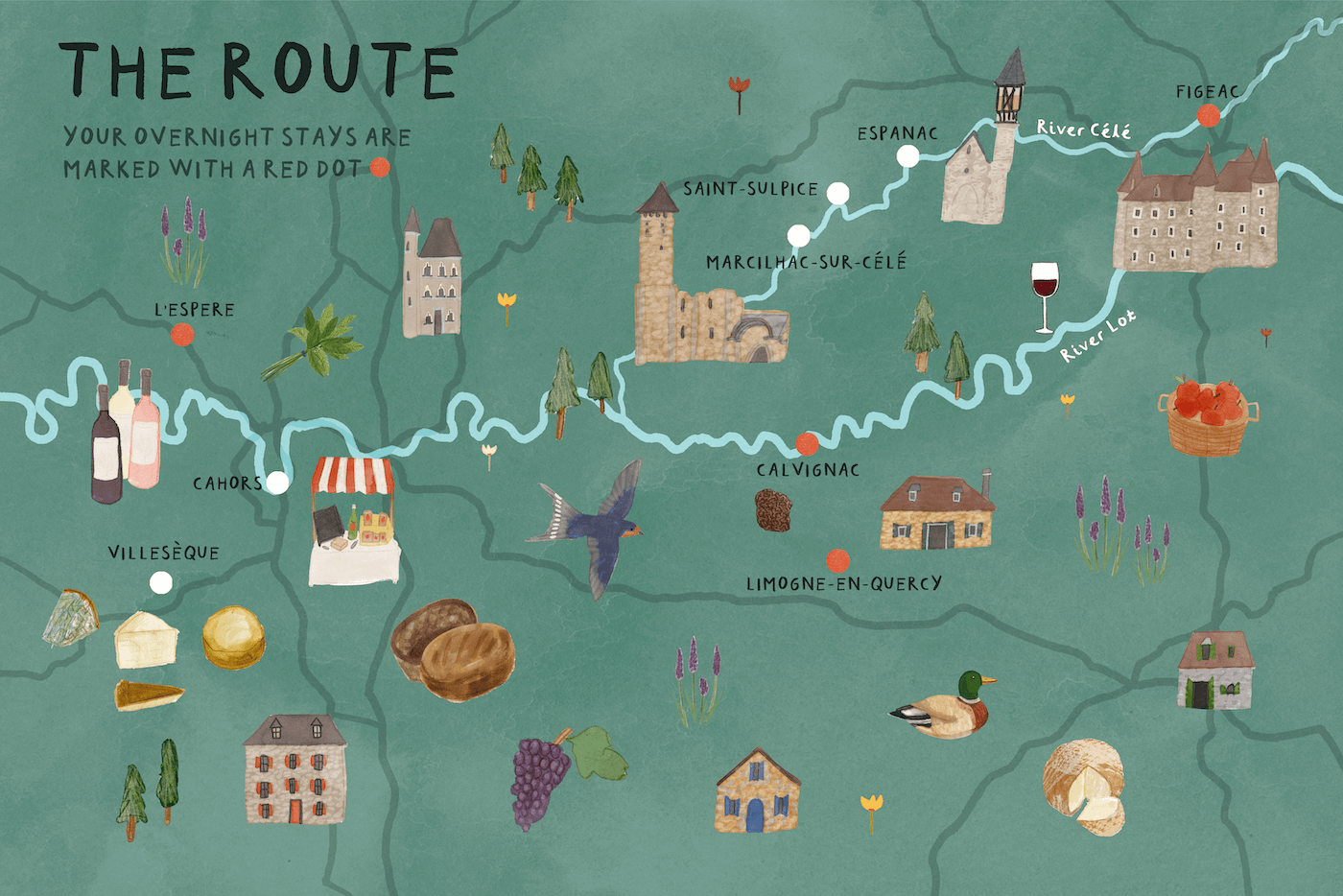
Day 1 - Monday 5 October - Arrival
Transfer 1 hr 20 mins
Our recommended train and flight options arrive into Toulouse. We’ll meet you and drive to L’Espère in the heart of Quercy’s gentle hills. After settling into the elegant Domaine de Labarthe, we’ll take a short afternoon walk through the surrounding countryside dotted with walnut groves and wild herbs. This evening, enjoy our first dinner together, accompanied by a glass of local wine, before a peaceful night in the Dordogne-style manor.
Day 2 - Tuesday 6 October - Around L’Espère
Cycle 40–50 kms
We begin our first full day on the bike with a circular ride west from L’Espère, following quiet lanes through farmland and villages. Lunch is a feast at Ferme du Tessou, where our hosts raise the famed Noir de Bigorre black pigs. In the afternoon we’ll visit a local winemaker for a tasting. If the weather is warm, we might even take a dip in the Lot River before returning to the Domaine for the evening.
Day 3 - Wednesday 7 October - L’Espère to Calvignac
Morning transfer 15 mins, walk 2 hours, cycle 40 kms
A short drive brings us to the medieval Pont Valentré in Cahors. We’ll walk into the city for its vibrant market and a chance to sample the region’s produce: cheeses, walnuts, truffles, wines and charcuterie. After a leisurely browse, we saddle up for a ride along the Lot, stopping for a picnic lunch en route before climbing to the clifftop village of Calvignac.
Day 4 - Thursday 8 October - Limestone Plateaux and Limogne
Cycle 50 kms
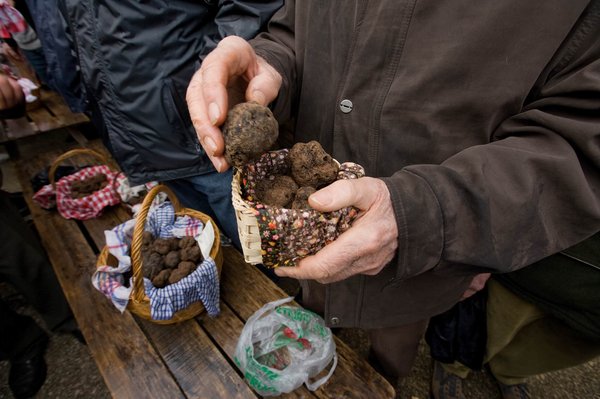
Today’s ride takes us across the limestone plateau towards Limogne, an area known for its truffle oaks. Lunch will be at the acclaimed La Table de Charrou, serving authentic local cuisine with signature wines. In the afternoon, we will join a truffle-hunting expert to learn about the prized 'black diamonds' of Quercy. In the afternoon we will return on quiet roads to our home for the night.
Day 5 - Friday 9 October - Calvignac to Figeac
Cycle 55 km
From Calvignac, we follow the Lot upstream through timeless rural scenery, heading across the limestone Causses to the Célé valley, where we will have lunch in the hamlet of St-Sulpice. In the afternoon we will head along the Célé, with an opportunity for a wild swim, towards Figeac. We stay overnight at the elegant Château de Saint-Dau.
Day 6 - Saturday 10 October - Célé Valley
Morning cycle 25k kms - Afternoon 2.5 hour walk
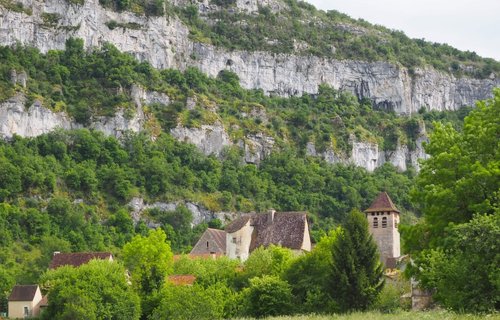
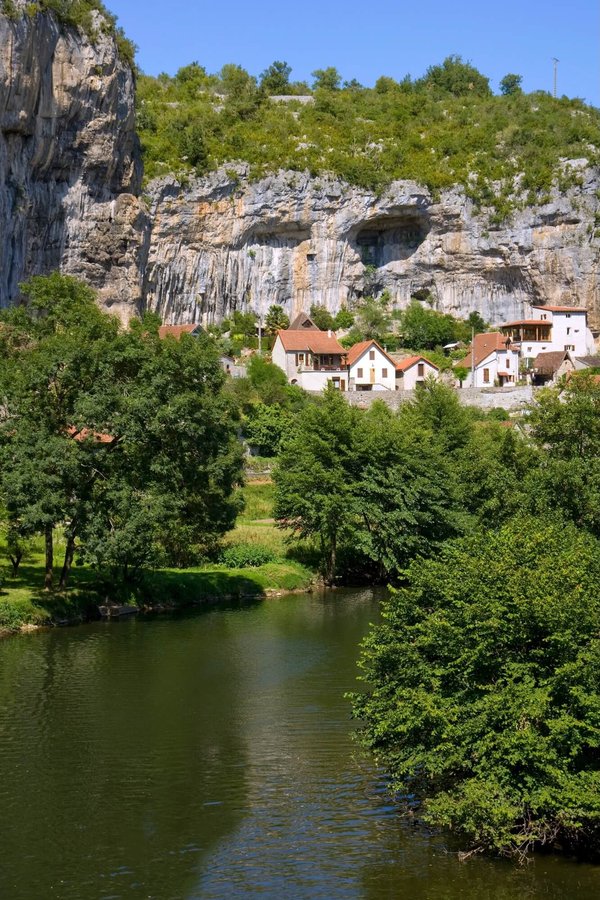
Today we ride a scenic loop along the tranquil Célé Valley, passing limestone cliffs and medieval hamlets. Midway, we leave our bikes for a short walk to the riverside village of Espagnac. Lunch will be at the atmospheric Bar Restaurant Communal du Prieuré, housed in a restored monastery. We'll return to Château de Saint-Dau for a final evening together in Quercy.
Day 7 - Sunday 11 October - Departure
After a hearty breakfast, we will transfer you to Toulouse for your onward journey.
Practical Information
Guiding & Support
Our attention to detail sets us apart. You will be accompanied by a member of The Slow Cyclist team from the UK who will act as your host. In addition, you will be looked after by two of our local guides throughout. Be assured that you will learn of the history, culture, traditions, politics throughout your time, and we are sure you will become firm friends by the time you leave. Finally, your bags will be driven ahead each day and a support vehicle will be on hand (although never too close) in case you need a lift.
Accommodation
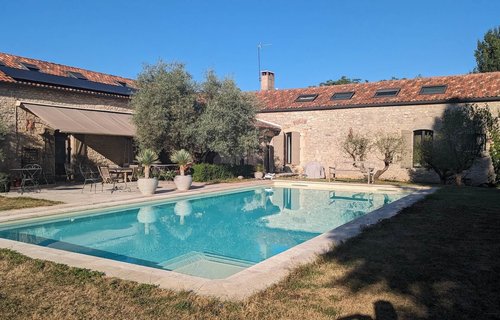
Throughout our journey we'll stay in a mix of small boutique hotels and charming guest houses. All rooms are en-suite, and all the accommodations have pools. Domaine de Labarthe is one of the longest standing guesthouses in the region and the estate and its vineyards have been passed down the family for generations. Mas de Garrigue and Chateau de Saint Dau have been lovingly and painstakingly renovated by their owners who were drawn to the properties and the area by its charm. For larger groups requiring more than five rooms, we may split the group between Mas de Garrigue and another nearby guest house. Each of the properties offers a comfortable and luxurious stay away from the bustle of France’s tourist hotspots.

Bikes & Safety
We take your safety seriously. You must wear a helmet when cycling and we cannot accept bookings from anyone unwilling to wear one. The bikes you'll be riding with us are electric bikes. You will be given a brief lesson in how to use them effectively before we start cycling. If you have any technical issues during your time with us, from squeaky brakes to punctures, please let us know and we’ll fix it. And finally, please don’t worry if you feel you are too slow or too fast for others in the group. We have a guide at the front and one at the back precisely for that reason. Please remember, we're not here to race; this is a journey to take time over.
Packing & Reading
Well in advance of your travels we will send you an online Information Pack including various details you need to know in advance. This will include a suggested packing list but also a reading list, should you wish to soak up some of France's vast variety of literature before you go.
 We partner with Trust My Travel so that, in accordance with travel industry regulations, your funds are 100% protected.
Pricing & Booking
Price
£3,895 per person
Extras |
|
|---|---|
| Single Supplement | £495 |
We are often told how nice it is that almost everything is paid for up front. So, while you are with us you can forget about your wallet, relax and enjoy yourselves. Included are:
- Group airport transfers (1 x arrival, 1 x departure)
- Support vehicle and luggage transfers
- TSC host & 2 x English-speaking local guides
- All accommodation, meals, snacks & drinks
- All activities
- Electric bike and helmet hire
- 100% financial security
- Donation to a local cause that is aligned with our values
- Flights
- Personal costs
- Tips (optional, of course)
- Travel insurance
- Visas (if required)
For private groups a 30% deposit is required from the group leader and, thereafter, from each member of the party. A minimum of 50% of the party are required to book and pay their deposit within one month of the group leader. The balance is due 10 weeks before the departure date.
If you are travelling on one of our Scheduled Journeys, we require a 30% deposit on the core trip price (i.e. not on any extras) at the time of booking. The balance is due 10 weeks before the departure date.
Please make sure you are familiar with our Standard Terms & Conditions before booking
You will receive two emails shortly after booking. First, a payment receipt, then a second email explaining next steps. Within two working days you will then be contacted by a member of our Guest Services team who will look after and advise you in the lead up to your travels.
We partner with Trust My Travel so that, in accordance with travel industry regulations, your funds are 100% protected.
Flights & Trains
You are responsible for booking your own flights or trains. They are not included in the cost of the trip. It is possible to reach Toulouse from London on high speed trains comfortably within a day. Detailed information and timetables can be found here. If you'd prefer to fly, we usually recommend arriving into Toulouse on a British Airways flight from London Heathrow and returning from and to the same airports. We will let you know when the flight schedule is released. If you would like help researching and booking your flights we recommend contacting Liz Rees, who helps many of our guests with their supplementary transport requirements. Her contact details are liz.rees@travelcounsellors.com or +44 7816 936876. Please let her know your departure dates and preferred airport.
Transfers
We will provide one transfer for the group on arrival and another on departure. If you require alternative transport options because you are arriving or leaving earlier or later please contact our team on +44 1865 587 994 and we can arrange this for you at an additional cost. If you're interested in planning an onward journey, we recommend contacting Liz Rees who can help with flight and train arrangements.
Protect the Planet
We are thrilled that increasing numbers of our guests are choosing to get to and back from their Slow Cyclist adventure in creative ways, for environmental reasons. We understand that this may not be practical, but urge you to consider doing so if you can make it work. Of course, you can undertake the research and book yourself, or Liz Rees can organise your journey for you.
Quercy's history dates back to prehistoric times, with some of the most extraordinary cave art in Europe found here. The caves of Pech Merle, near Cabrerets, are decorated with paintings dating back almost 30,000 years, with illustrations of spotted horses, mammoths and human handprints demonstrating the presence of settled communities in the valleys long before written history.
The name Quercy is believed to derive from the Gaulish tribe of the Cadurci, who inhabited the area before the Roman conquest. Cahors, originally known as Divona Cadurcorum, became a thriving Roman town. Its thermal baths, amphitheatre and aqueducts are evidence of a wealthy provincial centre that benefitted from trade along the Lot River. Roman bridges and roads shaped the region’s early infrastructure, much of which influenced settlement patterns for centuries to come.
During the Middle Ages, Quercy became strategically important as a frontier territory between French and English forces during the Hundred Years’ War. Castles such as those at Najac and fortified villages like Saint-Cirq-Lapopie stand as reminders of these turbulent centuries. At the same time, bastide towns such as Villefranche-de-Rouergue were founded in the 13th and 14th centuries, their grid-like layouts and arcaded squares designed to encourage trade and secure political control.
The Renaissance and early modern period brought renewed prosperity, largely through agriculture and viticulture. Cahors wine, often called the “black wine” for its deep colour and strength, gained renown across Europe, finding favour with popes in Avignon and later with Russian tsars. The Lot River, navigated by flat-bottomed gabarres, was the main artery of this commerce, carrying timber, wine and walnuts downstream to Bordeaux.
Quercy, like much of rural France, was shaped by waves of change in the 18th and 19th centuries. The Revolution and later Napoleonic rule reorganised land ownership and administration, while the Industrial Revolution drew many rural inhabitants away from the valleys and plateaux towards the cities. Yet agriculture remained central, with truffles, walnuts and goose farming becoming hallmarks of Quercy’s identity alongside its vineyards.
In the 20th century, Quercy was not untouched by conflict. The region endured hardship during both World Wars, with resistance groups active in its forests and valleys during the German occupation of the Second World War. After 1945, like much of rural France, Quercy's younger generations moved to France's cities, but its traditional landscapes and villages endured.
Today, Quercy is a living record of France’s layered past, from prehistoric cave art to Renaissance markets.
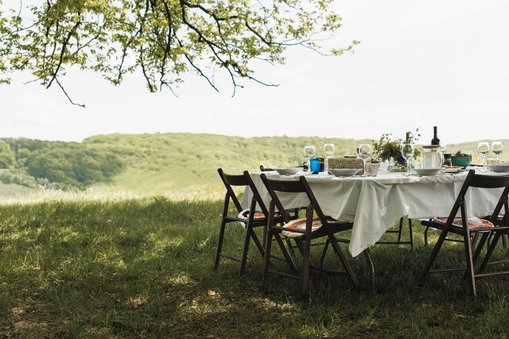
Unique Experiences
Travel is so often commoditised and unimaginative. We are the antidote, taking time to create beautifully crafted, one-of-a-kind experiences to places that excite us.
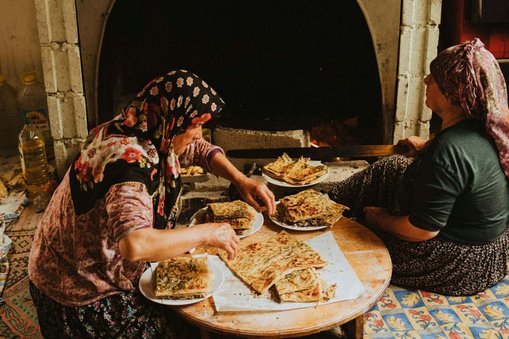
Community & Connection
We cherish personal relationships and friendships and seek to strengthen cross-cultural bonds, respecting and supporting those who enter our orbit. All must feel our impact is positive.
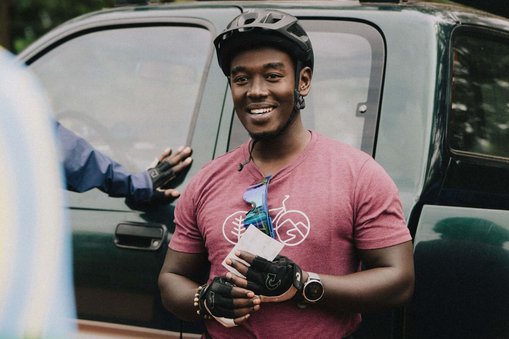
Dedication to Excellence
We design experiences with passion, flair and innovation. We seek continual improvement, to offer the best experience possible.
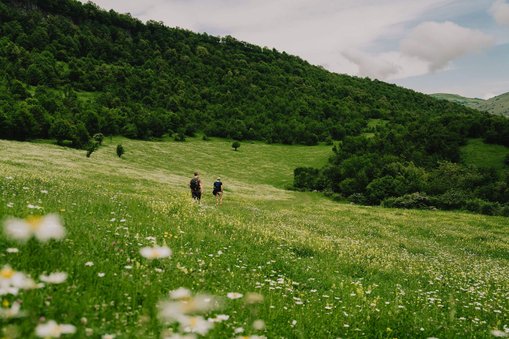
Care for the Planet
We travel with a light footprint and we seek ways to protect and celebrate Earth’s biodiversity and ecosystems.
Charitable Giving
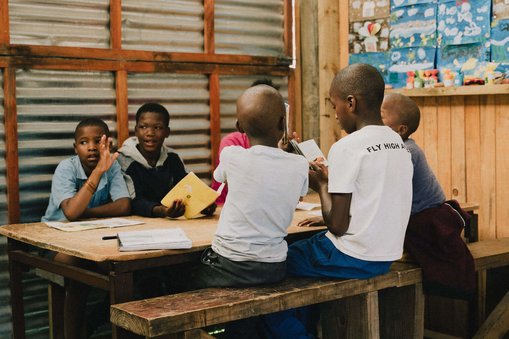
Each year, we donate 1% of our revenue to a variety of causes across our destinations and in the UK, each aligning with our values.
Where It All Began...
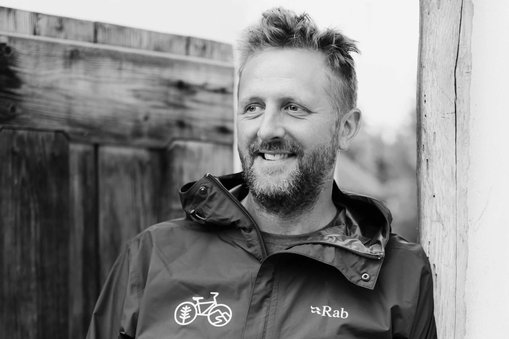
It all began with a 28,000km cycle to Australia. Founder Oli Broom fell in love with watching the world roll by under his wheels and wanted to share that joy with others. Read more.